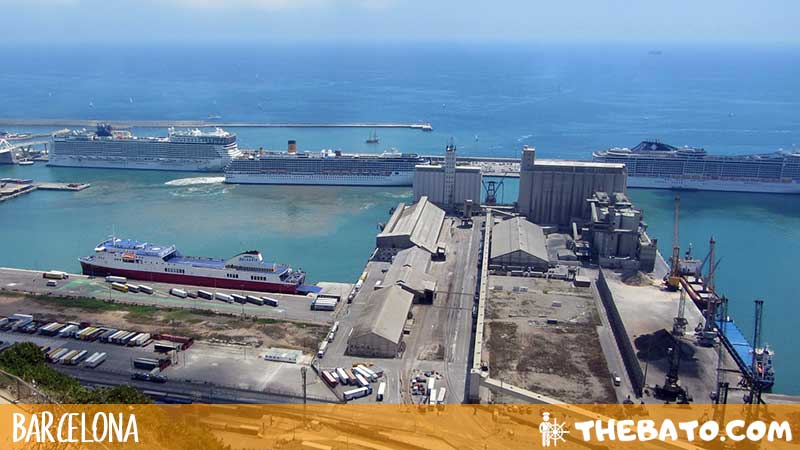
Barcelona: ferries, timetables and prices
The port of Barcelona is one of the main ferry hubs in the western Mediterranean, with routes to Nador and Tanger Med in Morocco, the Balearic Islands (Palma, Ibiza, Mahon) and Italy. On TheBato you can compare ferry companies, timetables and prices, add your vehicle and choose between seat or cabin in just a few clicks, with support in English, Spanish and Catalan.
Search ferry tickets
Popular routes from Barcelona
- Barcelona ↔ Nador – popular route for travellers to the Rif region
- Barcelona ↔ Tanger Med – connection between Catalonia and northern Morocco
- Barcelona ↔ Palma de Mallorca – frequent sailings to Mallorca
- Barcelona ↔ Ibiza – route combining road and island holiday
- Barcelona ↔ Mahon (Menorca) – seasonal and regular services to Menorca
Tip: in summer, during Ramadan and school holidays, ferries from Barcelona with cars, vans and family groups can sell out quickly. Book early if you need a cabin or specific dates.
Alternative routes and nearby ports
If you do not find sailings on your date, check alternatives from Valencia or other Spanish ports, and combine with internal routes in Spain, France or Morocco.
Timetables and crossing time
From Barcelona you will find both medium-distance routes to the Balearic Islands and longer crossings to Morocco and Italy:
- Barcelona – Nador / Tanger Med: long routes that usually take around 24–32 hours, depending on the company, ship type and any intermediate stops.
- Barcelona – Palma de Mallorca: generally about 7–8 hours, with day and night sailings.
- Barcelona – Ibiza: usually around 8–10 hours, depending on the timetable and possible stops at other islands.
- Barcelona – Mahon (Menorca): often between 8–10 hours, with more departures in high season.
- Barcelona – Civitavecchia (Italy): long-distance crossing, often overnight, which can exceed 20 hours.
Timetables vary by season and company. In high season (summer, Easter, Christmas and long weekends), there are more departures but also more demand, especially for cabins and vehicle spaces.
Prices and how to save
- Book as far in advance as possible, especially for summer, Ramadan (for Morocco routes) and school holidays – prices usually increase as departure approaches.
- Compare different days and departure times (mid-week, early morning, late evening) to find better fares.
- For long crossings to Morocco or Italy, consider booking a cabin, particularly if you travel with children or older relatives.
- If your dates are flexible, compare ferries from Barcelona, Valencia and other Spanish ports to Nador, Tanger Med and the Balearic Islands.
Documents and boarding
- Check-in: arrive 2–3 hours before departure with a vehicle; at least 90 minutes as a foot passenger (more in high season and on international routes).
- EU travel (Balearic Islands, mainland Spain, Italy): EU citizens usually travel with a valid ID card or passport; non-EU nationals normally need a passport and, if required, a visa.
- Morocco routes (Nador, Tanger Med): valid passport and, where applicable, visa or residence papers. Check the latest entry requirements for Morocco before travelling.
- Vehicle: registration document, insurance (green card if needed), valid technical inspection; if the vehicle is not in your name, carry a written authorisation.
- Luggage: follow company rules on weight and size, and customs regulations (goods, tobacco, alcohol, food and cash), especially on international routes.
- Pets: generally allowed, but each company has its own rules on pet passports, vaccinations and where animals can stay on board (kennels, pet areas, cabins).
How to get to Barcelona port
- By road: Barcelona is connected by motorway and main roads with the rest of Catalonia, Spain and France.
- By car: follow signs to “Port de Barcelona / Ferries” from the city ring roads; allow extra time in peak hours and during holiday periods.
- Public transport: metro, buses and some shuttle services connect the city centre and key areas with the port zone (depending on the terminal and company).
- Train: from Barcelona Sants or other stations you can continue by metro, bus or taxi to the ferry terminals.
- Airport: Barcelona–El Prat airport is a short drive away, with taxis, buses and train/metro links to the city and then on to the port.
- Parking: near the port and cruise/ferry terminals there are car parks and parking areas; check short- and long-stay options if you plan to leave your vehicle there.
Port services
The port of Barcelona has modern passenger terminals with ticket offices, check-in counters, police and customs controls, waiting lounges, cafés, restaurants and shops. Facilities for travellers with reduced mobility are generally available, with ramps, lifts and assistance on request. There are dedicated boarding areas for foot passengers and vehicles on routes to the Balearic Islands, Morocco and Italy.
Why book with TheBato
With TheBato, you can compare in one search the ferries between Barcelona, Nador, Tanger Med, the Balearic Islands and Italy. Add your car, motorbike, van or camper, choose seat or cabin and pay securely. Our team is used to helping families, residents and cross-border travellers between Spain, Morocco and other Mediterranean destinations, with support in English, Spanish and Catalan via WhatsApp and email.
Related ports
View ferries from Barcelona
Frequently asked questions (FAQ)
Are there ferries all year round from Barcelona?
There are ferries for most of the year between Barcelona, the Balearic Islands, Morocco and some Italian ports, with more departures in summer and on holiday dates. Timetables can vary by season and company.
How long is the Barcelona – Nador ferry?
The Barcelona – Nador crossing is a long route that typically takes between 24 and 32 hours, depending on the ferry, company and any intermediate stops.
Can I travel with a car, van or camper from Barcelona?
Yes, ferries from Barcelona usually accept cars, motorbikes, vans and campers. You must enter the correct vehicle type and dimensions when booking.
Are pets allowed on ferries from Barcelona?
In general pets are allowed, but each company has its own rules on pet passports, vaccinations, where animals can stay on board and any extra fees. Always check the conditions before booking.
When should I arrive at Barcelona port for boarding?
It is recommended to arrive 2–3 hours before departure with a vehicle and at least 90 minutes as a foot passenger, allowing extra time in high season or for international routes.

 Modern Cow Boy Hat
1 × $100.00
Modern Cow Boy Hat
1 × $100.00
 Cat Eye Sunglasses
1 × $10.00
Cat Eye Sunglasses
1 × $10.00